


Move-Out Cleaning List: From Kitchen to Carpets
Move-out day in Chicagoland piles on fast: boxes, movers, utility transfers, and a tight clock. The cleaning walkthrough can feel like a final exam where the grade is your security deposit. Starting 48 hours before handoff with this room-by-room rental cleaning plan removes the guesswork. EuroMaids provides professional move-in/move-out cleaning services for renters and homeowners across Naperville, Lisle, and surrounding Chicagoland communities.
Quick Prep Before You Start Cleaning
Good results start with preparation, not a mop. One week before move-out, pull the lease and confirm what condition the landlord expects. Some agreements say "broom clean". Others require professional carpet cleaning with a receipt. Ask the property manager directly so you clean to the right standard, not a vague one.
Once you know the standard, work through this short prep checklist:
- Confirm any required forms or pre-move-out inspection requests with your landlord.
- Schedule utilities to stay on through cleaning day; you need light to spot missed areas.
- Arrange trash pickup or a dump run for items that won't move with you.
- Walk every room the night before keys are due and note any damage to address or document.
- Empty all cabinets, closets, and drawers before cleaning begins.
Cleaning around belongings is how things get missed. An empty room is faster and more thorough every time.
Essential Supplies for Move-Out Cleaning
Gather everything before the first wipe. Running to the store mid-clean breaks momentum and costs time you probably don't have.
Basic Tools
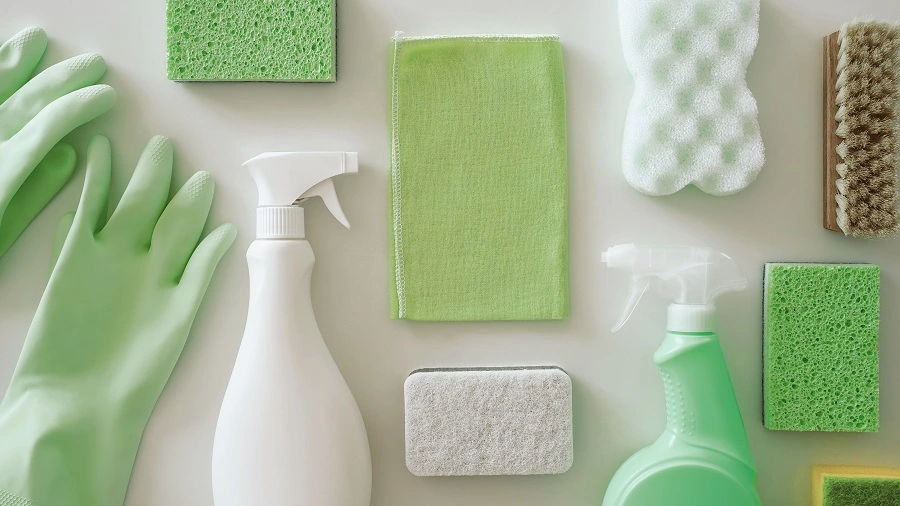
- Microfiber cloths
- Scrub pads
- Mop and bucket
- Vacuum with edge and crevice attachments
- Grout brush
- Squeegee
- Heavy-duty trash bags
Everyday Cleaners
- Mild all-purpose cleaner
- Dish soap
- 1:1 white vinegar and water solution for glass and non-porous surfaces
- Baking soda paste for gentle scrubbing
These handle most surfaces without harsh fumes and are safe around pets and children. The same non-toxic cleaning approach applies to rental properties where the next occupant may move in within days.
Targeted Products
- Kitchen degreaser for range hoods and stovetops
- Limescale remover for hard-water buildup around faucets and showerheads
- Enzyme-based cleaner for pet odors in carpet or upholstery
Safety note: test any cleaner in a small, hidden spot first. Never mix bleach with vinegar or ammonia-based products, and keep windows open when using stronger solutions.
Timeline Planning for Large Moves
Tight handoff windows are common in Chicagoland, especially during peak move season in late spring and early summer when leases and school years end together. Use this table to plan realistically based on home size:
For larger homes, a two-day approach works well. Two days before move-out, tackle the kitchen and bathrooms. They take the most time and dry slowly after deep scrubbing. On move-out morning, use the final 90 minutes for floors, touch-ups, and documentation photos.
If you're in a building with a shared elevator or loading dock, book your cleaning window around those logistics. Cleaning after furniture leaves is always faster. Assign rooms to helpers rather than having everyone cleaning the same space at once.
Move Out Cleaning Checklist by Room
Each room has its own failure points. The sections below focus on the spots that appear most often in security deposit disputes: not just a surface wipe, but the corners, seals, and surfaces landlords actually check during the final walkthrough inspection.
Kitchen
The kitchen takes the longest. Grease buildup, appliance residue, and cabinet grime are the most common reasons tenants lose deposit deductions. Work top-to-bottom to avoid re-cleaning surfaces you've already finished.
- Wipe cabinet fronts, handles, and tops; clean inside all cabinets and drawers
- Clean the inside and outside of the refrigerator, including door seals and the drip tray underneath
- Clean the oven inside and out; remove and soak grates and burner caps
- Degrease the range hood, filter, and surrounding wall area
- Wipe the microwave inside and out, including the turntable
- Sanitize the sink, faucet, and disposal; if odor lingers after running ice and citrus, garbage disposal smell is usually traced to buildup under the splash guard
- Clean countertops and backsplash tile grout
- Wipe baseboards, then sweep and mop floors
The refrigerator door gasket and the area beneath the stove are two of the most commonly missed spots in move-out inspections. Both are flagged regularly during landlord walkthroughs.
Bathrooms
Bathrooms need descaling and disinfection, not just a surface wipe. Hard water deposits, soap scum buildup, and grout staining are the issues most likely to trigger deductions. The full deep bathroom cleaning process follows the same top-to-bottom sequence and is worth a pass before move-out day.
- Descale the showerhead, faucets, and tub fixtures with a limescale remover
- Scrub tile grout lines and the tub surround with a dedicated grout brush
- Disinfect the toilet inside and out, including the base and behind the tank
- Clean and polish mirrors and the medicine cabinet interior
- Wipe the vanity, sink, and all high-touch surfaces
- Clean exhaust vents and wipe baseboards
- Scrub shower door tracks and channels, which collect soap scum and are frequently flagged during inspections
Bedrooms and Living Areas
These rooms look cleaner, but they still require careful attention to detail. Dust accumulation on light fixtures, scuff marks near switches, and dirty window tracks are the areas that separate a thorough clean from one that looks rushed.
- Dust ceiling fans, light fixtures, and HVAC vents
- Wipe all doors, door frames, and handles, especially around high-traffic areas
- Clean windowsills, window tracks, and blinds
- Vacuum carpet edges and corners; treat any stains with an enzyme-based cleaner
- Spot-clean scuffs on walls near light switches and doorframes where permitted without damaging paint
- Wipe baseboards throughout
Laundry and Utility Areas
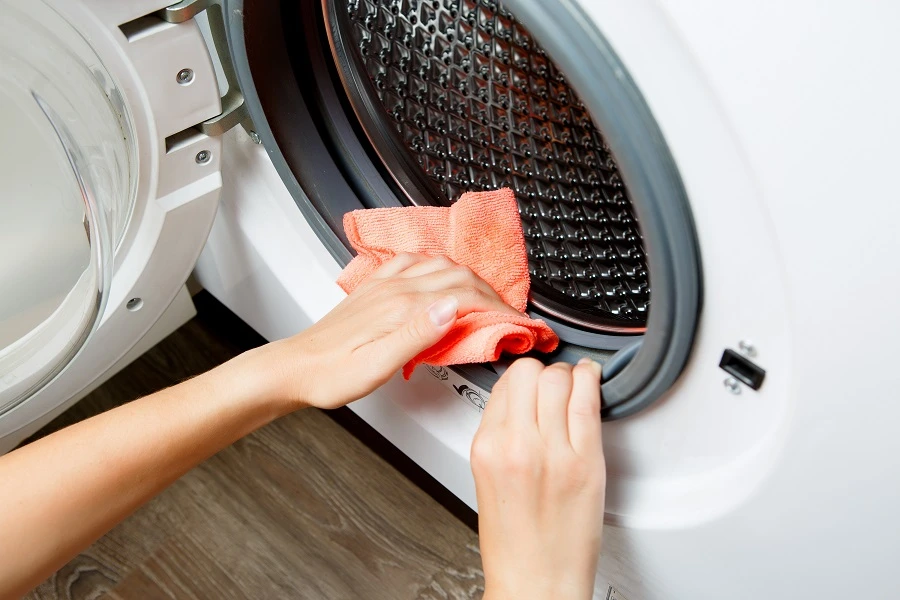
These rooms are easy to skip and easy to fail on inspection. Landlords check them.
- Wipe the inside of the washer drum and clean the door gasket; this is where mildew growth starts and landlords often check it
- Clean the dryer lint trap housing and wipe the drum interior
- Dust around the water heater and any utility equipment
- Sweep and mop behind and under machines where accessible
Entry, Hallways, and Stairs
First and last impressions matter. A landlord walking through will notice the entry immediately.
- Wipe railings and banisters
- Clean entry glass and the doormat area
- Check corners and ceiling edges for cobwebs
- Sweep and mop or vacuum all floor surfaces
Floors and Carpets
Floors are the last step in every room. Clean them after everything above has been addressed.
- For hard floors, vacuum first, then mop with a clean solution; avoid excess moisture on wood and laminate.
- For tile and grout, use a grout brush and appropriate cleaner to lift embedded dirt; tile floor cleaning varies by surface type, so match your method to the material.
- For carpets, use a vacuum with strong suction; HEPA-style filtration vacuums capture fine particles, allergens, and pet dander that standard vacuums leave behind.
- Treat carpet stains and odors with an enzyme-based cleaner before the final vacuum pass.
- For heavily soiled or pet-affected carpets, professional carpet cleaning is worth considering; some leases require a receipt as proof.
What "Broom Clean" and Lease Language Actually Mean
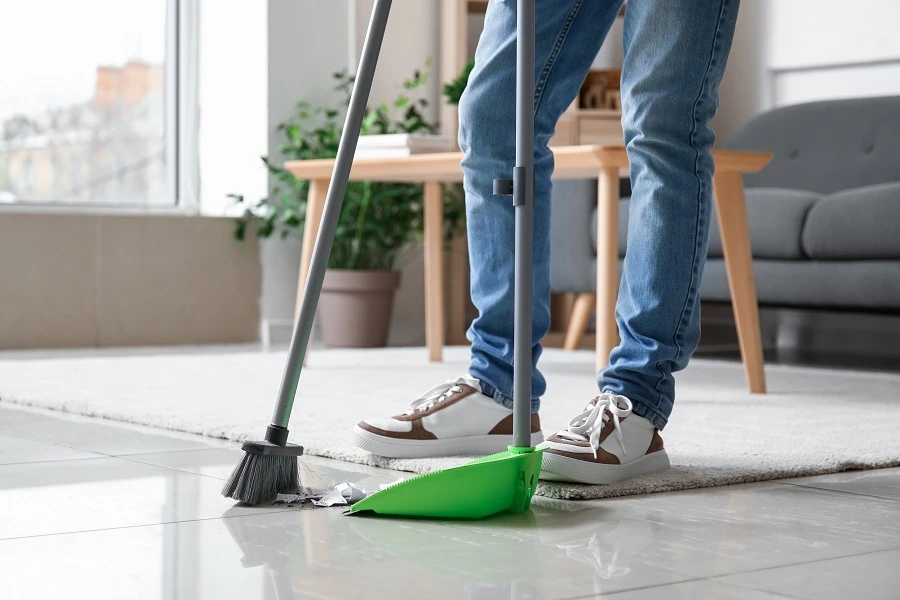
This matters most when you're unsure what the landlord will inspect, or when a deposit dispute feels likely. "Broom clean" typically means swept floors, no trash, and surfaces free of visible debris. It rarely requires deep-cleaned appliances or scrubbed grout, but interpretations vary.
Ask your property manager for a written checklist before move-out. If the lease requires professional carpet cleaning, keep the receipt. Illinois security deposit law (765 ILCS 710/1) governs what landlords can deduct and how quickly deposits must be returned.
Photo-Proof and Final Walkthrough Steps
Documentation matters most in two situations: when you're leaving a property with any pre-existing damage, and when you're renting in a market where deposit deductions are common. Photos are the clearest record of a unit's condition at handoff. Take them right after cleaning is finished, while everything is still fresh and before any foot traffic disturbs the space.
- What to photograph: Wide shots of every room, close-ups of the stove interior, refrigerator interior, sinks, toilets, tubs, floors, and inside all cabinets. Capture anything that could later be disputed. High-touch surfaces like door handles, light switches, and faucets are worth a close-up since they're often cited in post-tenancy complaints.
- How to photograph: Open blinds, turn on overhead lights, and avoid shadows. Shoot from multiple angles in the kitchen and bathrooms. Blurry or dim photos offer little protection.
- File organization tip: Name photos by room and date, for example "kitchen-oven-interior-04-14-2026", so they're easy to locate if a dispute surfaces weeks later.
Within 30 minutes before key handoff, do a final sweep with a microfiber cloth, an all-purpose spray, and a trash bag. Confirm all keys, garage remotes, mailbox keys, and parking passes are accounted for. Check trash and recycling rules, since some buildings require bins emptied and returned to specific locations. Replace any burned-out light bulbs if your lease requires it, and get written acknowledgment of the key return.
DIY vs. Professional Move-Out Cleaning
The right choice comes down to three things: how much time you have, the condition of the property, and whether your lease has any cleaning requirements attached.
For a well-kept one-bedroom or condo, a focused DIY effort is often enough, particularly if the move-out cleaning cost in Naperville falls outside your budget. When the deadline is tight, the home is large, or there's heavy grease and pet damage involved, a professional team covers the areas that are easiest to miss under pressure and brings equipment that consumer tools can't match.
Leave with Confidence, Not Questions
A checklist, a realistic timeline, and well-lit photos separate a smooth move-out from a stressful one. Confirm your landlord's standard first, then work room by room. For anything beyond a surface wipe, deep cleaning tasks need to be factored in early.
If you'd rather hand the cleaning off entirely, EuroMaids has been providing Naperville home cleaning services since 1996. BBB A+ rated, with background-checked teams, eco-friendly products, flat-rate pricing, and a 100% satisfaction guarantee, we cover every detail landlords look for during a final walkthrough. Contact us to get a free estimate and schedule your move-out clean before your keys are due.

Related Posts

April 14, 2026
April 15, 2026
How Much Does Upholstery Cleaning Cost in Naperville, IL? 2026 Guide.
The average cost of upholstery cleaning in Naperville runs $120–$232 in 2026. See prices by furniture type and book a free estimate with EuroMaids.
Read More
April 13, 2026
April 13, 2026
How to Deep Clean a Couch at Home: A Complete DIY Guide
Looking for the best way to deep clean a couch? This guide covers every fabric type, the right tools, and stain removal tips that actually work.
Read More
April 6, 2026
April 13, 2026
How to Clean House After Mold Remediation: The Complete Checklist
Not sure how to clean house after mold removal? EuroMaids walks you through surfaces, carpets, air quality, and HVAC in one complete guide.
Read More