


How Much Does Upholstery Cleaning Cost in Naperville, IL? 2026 Guide.
Getting a quote for upholstery cleaning and having no idea whether it's fair is genuinely frustrating — prices vary, add-ons appear out of nowhere, and most guides throw out national averages that mean nothing locally.
If you're in the Naperville area, Naperville upholstery cleaning has its own pricing dynamics shaped by local labor costs, furniture types, and seasonal demand. This guide breaks it all down so you know exactly what to expect before anyone walks through your door.
What Is the Average Cost of Upholstery Cleaning in Naperville?
As of 2026, a standard residential visit for professional upholstery cleaning in Naperville averages around $174, with most projects landing between $120 and $232, depending on furniture size, fabric type, and soil level. Most providers in the area apply a minimum charge of $149 per visit to cover the mobilization of equipment and crew.
The table below reflects current Naperville-area pricing from local providers:
Loveseats and larger pieces with removable cushions carry an additional cushion cleaning charge: +$20 for a loveseat, +$30 for a standard sofa, up to +$70 for a U-shaped sectional. This covers cleaning all sides of each cushion plus the furniture deck and inner frame.
The national average, per Angi's 2026 cost guide, runs between $100 and $250 per piece. Naperville pricing sits within that range, though large sectionals and specialty fabrics regularly land above it.
How Much Does It Cost to Get Upholstery Cleaned for a Whole Room?
When multiple pieces need cleaning in one visit, per-item pricing adds up quickly — but bundling works in your favor. Because providers maintain a minimum visit charge ($149+), it makes financial sense to schedule several pieces at once rather than booking separate appointments. A full living room set — sofa, loveseat, and two armchairs — would typically run $300–$450, which is far more cost-effective than three separate visits.
Bundling upholstery cleaning with a deep cleaning service or carpet cleaning in the same visit can also reduce your total cost per service.
What Changes Your Upholstery Cleaning Price
Several factors shift the final number up or down from the base rate.
Fabric Type and Material
Fabric material is the second biggest pricing driver after furniture size. Each material carries a different risk level and requires specific products or techniques — which is reflected directly in the quoted price.
Note: Applying the wrong cleaner to silk or velvet can cause immediate color bleeding that cannot be reversed. Fabric identification before treatment is not a formality — it determines the entire approach.
Furniture Size and Cushion Configuration
Removable cushions add significant labor. A technician has to clean all six sides of each cushion plus the furniture deck and inner frame — that's why cushion add-ons appear as a separate line item. A tufted sectional with a chaise extension takes considerably longer than a standard two-seat sofa.
Stain Severity and Odor Presence
Lightly used guest furniture and a sofa with three years of holiday gatherings are priced differently. Pet urine that has soaked into foam is a multi-step job requiring enzyme treatment and multiple extraction passes. Ground-in food oils, ink, or old red wine stains add pre-treatment time before the main cleaning pass can even begin.
Access and Logistics
Third-floor apartments or units near downtown Naperville without easy parking add logistical costs. Many providers charge a travel or high-rise surcharge of $25–$100 for difficult-access locations where hoses cannot be run directly from a truck-mounted system.
Season and Drying Conditions
During Chicagoland winters, closed windows and low temperatures slow drying considerably. Late summer — August through September — and the weeks before the holidays in November are the busiest booking periods. Scheduling two to three weeks ahead during those stretches usually means better availability and standard pricing.
Cleaning Method
The method used is determined by the fabric's care code and soil level, not personal preference. It also affects how quickly the furniture is back in use.
Hot water extraction uses pressurized hot water to loosen deep-seated dirt and extract it — the most thorough option for high-traffic furniture. Encapsulation crystallizes soil particles as the detergent dries, then vacuums them away, making it a solid choice for regular maintenance. Solvent cleaning is reserved for delicate materials that cannot tolerate moisture. Misapplying a water-based method to an "S" code fabric can cause irreversible fiber distortion.
For households with young children, pets, or allergy concerns, eco-friendly options using plant-based solvents are available. The cost premium is modest — typically $10–$20 per piece — and worth asking about.
Add-On Services and What They Cost
Add-ons are optional, and a reputable provider will discuss them before arrival, not after the technician has started work.
Professional Upholstery Cleaning Cost vs. DIY: Real Numbers
Many homeowners consider renting a machine and handling it themselves. Here's an honest comparison:
The real cost of DIY is risk, not the rental fee. Over-wetting causes browning and can promote mold growth inside foam cushions. Velvet and delicate weaves can be permanently altered by the wrong method or too much agitation. A service call to correct a DIY attempt often costs more than professional cleaning would have in the first place.
DIY is reasonable for a basic cotton or polyester piece with light soiling and no odor. For pet accidents, leather, large sectionals, or any fabric with a care tag marked "S" (solvent only) or "X" (vacuum only), a professional is the safer and more economical choice over time.
What to Ask Before Booking — and What to Watch For
Not every provider operates the same way, and pricing transparency varies more than it should. A few targeted questions before you confirm an appointment will tell you a lot about how the job will actually go.
Questions to Ask Any Upholstery Cleaning Provider
Before confirming any appointment, get answers to these:
- Is pricing per piece or per seat?
- What is the minimum service charge?
- Which add-ons are included vs. optional for my specific furniture?
- Does a travel or access surcharge apply to my address?
- Are technicians background-checked?
- What does the satisfaction guarantee cover?
- Will I receive an itemized invoice after the job?
A provider who answers these without hesitation is demonstrating accountability. Written policies and clear invoices are a baseline expectation, not a premium feature.
Red Flags to Watch For
- No written estimate before work starts
- Add-ons presented as mandatory after the technician has arrived
- Vague references to a "special solution" with no clear price attached
- Pressure to approve additional services on the spot
- No itemized invoice at job completion
The IICRC S300 Standard for Professional Upholstery Cleaning (Second Edition, 2025) sets the industry benchmark for fabric identification, chemical handling, and extraction technique. Asking whether technicians hold IICRC Upholstery and Fabric Cleaning Technician (UFT) certification is a fair question. A provider with nothing to hide will answer it directly.
Routine Maintenance to Lower Your Long-Term Costs
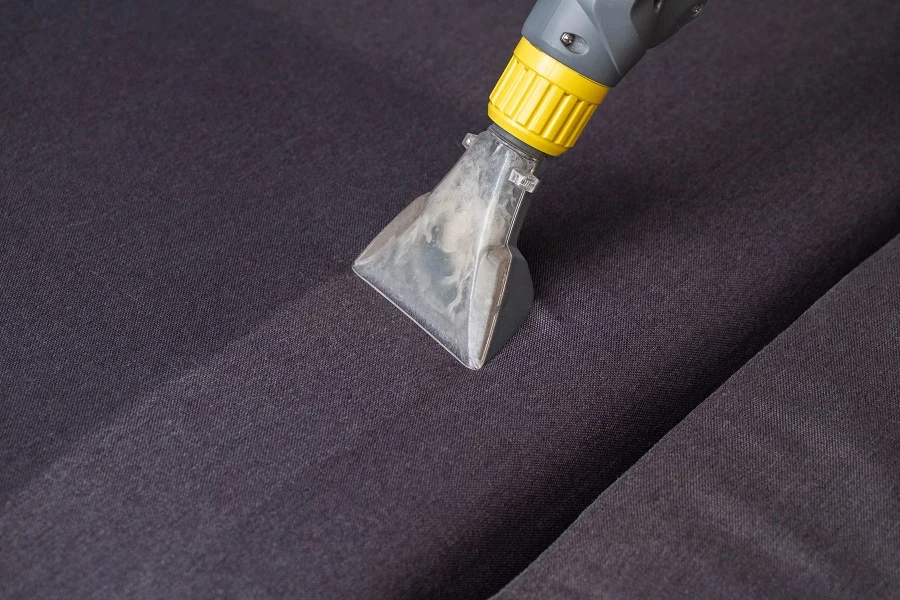
How often you clean between professional visits directly affects how much each professional visit costs. Regular upkeep keeps soil levels low, which keeps furniture in the standard pricing tier rather than the heavy-treatment category.
- Vacuum weekly: Use an upholstery attachment to pull up dust, pet dander, and food particles before they work into the fiber. This single habit does more for fabric longevity than almost anything else.
- Blot spills immediately: Rubbing spreads a stain and drives it deeper. Blot from the outside edge toward the center with a clean, dry cloth.
- Rotate and flip cushions every few months: This distributes wear evenly and prevents one area from breaking down faster than the rest.
- Schedule professional cleaning every 6–12 months: More frequently for high-traffic pieces or households with pets or young children. Late summer is a good anchor point before the closed-window months begin.
- Apply fabric protector after cleaning: At roughly $10–$30 per piece depending on size, it creates a barrier against spills and reduces the frequency of deep cleaning needed.
For a broader view of how often different surfaces in your home need attention, the home cleaning frequency guide covers furniture, floors, and other surfaces room by room.
Keep Your Furniture Looking Good and Know What It Should Cost
Upholstery cleaning cost in Naperville comes down to four main factors: furniture size, fabric type, soil level, and the cleaning method required. Most homeowners in Naperville, Lisle, Aurora, and Downers Grove pay between $120 and $250 for a standard sofa in 2026, with optional add-ons that should always be disclosed before work starts.
EuroMaids has been providing Naperville house cleaning services since 1996 — locally owned, BBB A+ rated, and staffed by background-checked professionals who use eco-friendly products. If you're ready to book or just want a straight answer on pricing, contact us for a free estimate.

Related Posts
April 13, 2026
April 13, 2026
How to Deep Clean a Couch at Home: A Complete DIY Guide
Looking for the best way to deep clean a couch? This guide covers every fabric type, the right tools, and stain removal tips that actually work.
Read More
April 6, 2026
April 13, 2026
How to Clean House After Mold Remediation: The Complete Checklist
Not sure how to clean house after mold removal? EuroMaids walks you through surfaces, carpets, air quality, and HVAC in one complete guide.
Read More
April 15, 2026
April 15, 2026
Move-Out Cleaning List: From Kitchen to Carpets
From kitchen grease to carpet stains — this move-out checklist covers it all. DIY tips, timeline, and professional cleaning options for Chicagoland renters.
Read More