


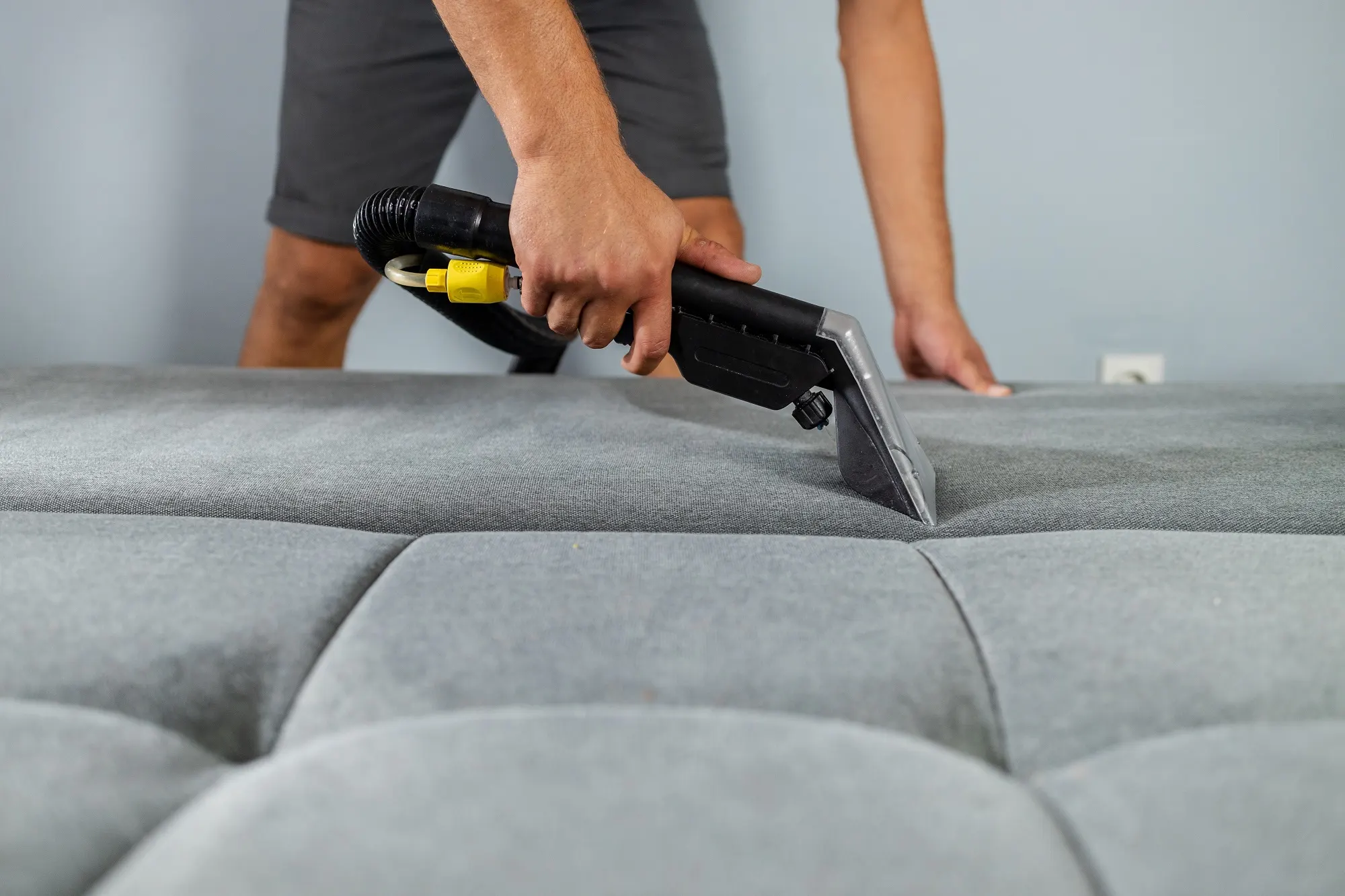
How to Deep Clean a Couch at Home: A Complete DIY Guide
Company guests are arriving Saturday, and that coffee stain has been there since the Cubs won the World Series. Before reaching for the nearest spray bottle, pause — the wrong cleaner on the wrong fabric can leave water rings worse than the original spill. This guide walks through a fabric-aware process for upholstery cleaning that avoids the most common deep clean couch DIY regrets.
Safety Checks Before You Start
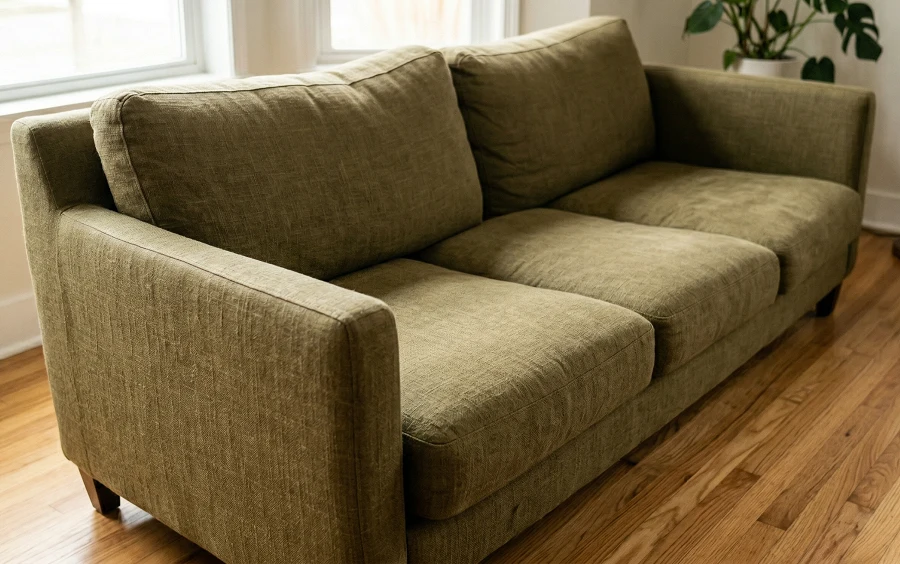
The single most important step happens before any cleaner touches the couch.
Read the Upholstery Cleaning Code
Find the manufacturer's tag — usually tucked under a cushion or on the frame's underside — and read the cleaning code. These four codes cover virtually all upholstered furniture:
- W — Water-based cleaners only
- S — Solvent-based cleaners only (no water)
- W/S — Either water- or solvent-based cleaners are safe
- X — Vacuum or brush only; no liquid cleaners
If the tag is missing, search the manufacturer's website or test a hidden area first. Knowing your code is the foundation of any safe, effective approach to how to deep clean a couch without causing damage.
Before you apply anything: Patch-test on a hidden spot and wait ten minutes. If dye transfer, stiffness, or water marks appear — stop. Antique fabric or an unreadable code? Call a professional.
Prep the Area Before You Start
Getting the space ready makes every step go smoother and helps the couch dry safely:
- Remove all throw pillows and cushion covers
- Protect the floor beneath with a dry towel
- Open windows or run a fan for ventilation
- Plan for at least four to twelve hours of drying time
Tools and Eco-Friendly Supplies
Getting the supplies right saves the fabric. Too much product is one of the most common mistakes — excess cleaner leaves residue that attracts new dirt faster than the original stain.
Must-Have Tools
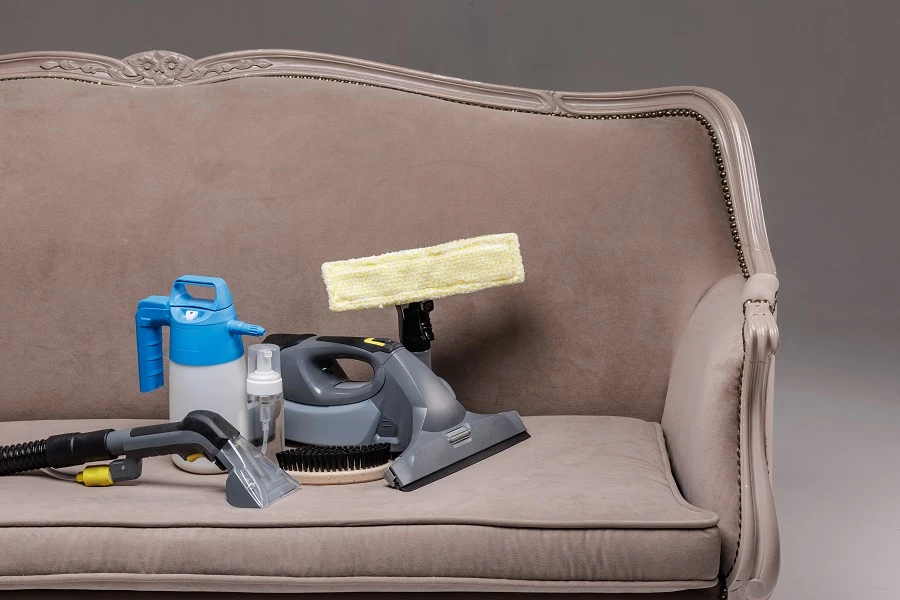
Before anything touches the fabric, make sure these basics are within reach. Having the right equipment set up in advance means you won't have to stop mid-clean and risk letting moisture sit too long.
- Vacuum with a crevice and upholstery attachment
- Soft-bristle brush
- White microfiber cloths (never colored — dye transfer is a real risk)
- Spray bottle for controlled application
- Box fan or portable fan for drying
Eco-Friendly Cleaning Options by Code
Matching the cleaner to the fabric code isn't optional. It's what separates a successful deep clean couch DIY from a costly mistake. These are the safest options for each code, all without harsh chemicals that linger around pets and kids.
- W or W/S fabrics: Mild dish soap or castile soap, or a baking soda paste mixed as three parts baking soda to one part water. A reliable DIY solution combines one cup of 70% isopropyl alcohol, one cup of water, and one teaspoon of dish soap. The alcohol ratio matters — higher concentrations can strip color on some fabrics.
- S-code fabrics: A low-odor dry-cleaning solvent applied sparingly with a white cloth. Use only in a ventilated space — these are not pet- or kid-safe until fully dry.
- Enzyme cleaners: Safe for pet households and effective on biological stains across most W-coded fabrics. For set-in stains, apply and allow a full fifteen-minute dwell time before blotting. Fresh stains respond faster; stains older than 48 hours may need a second application.
What to avoid entirely: Bleach, colored towels, soaking cushions through to the foam, and high heat on synthetic blends. These cause shrinkage, color loss, and mildew in the padding — outcomes that can't be undone.
Deep Clean a Couch: Step-by-Step
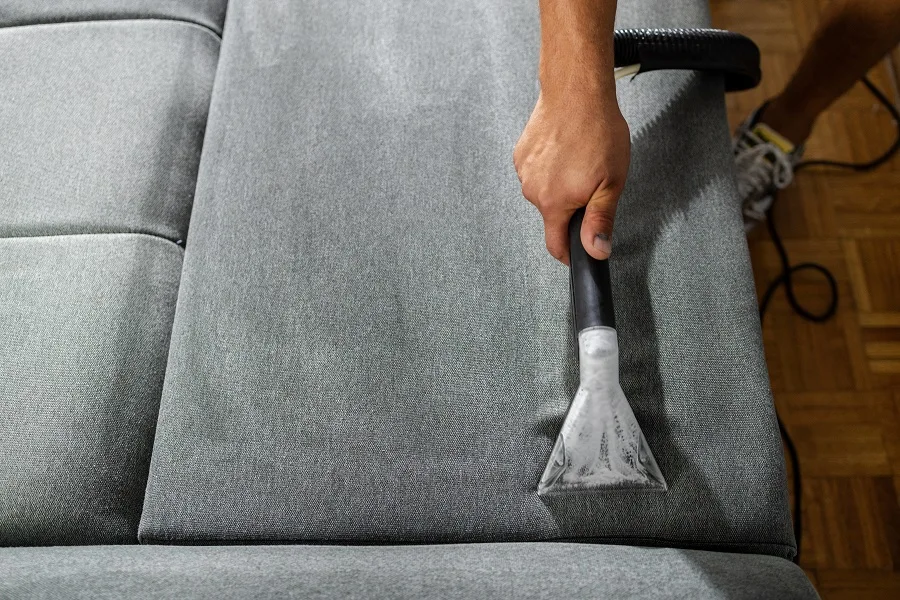
For busy households near Naperville's Riverwalk or families hosting graduation parties in spring, deep cleaning upholstered furniture at least once or twice a year is the realistic standard. Here's how to do it right.
Step 1: Dry Soil Removal
Vacuum every surface — cushion tops, undersides, seams, armrests, and the frame edges where pet dander and winter salt dust collect. Use the upholstery brush attachment to loosen pet hair before vacuuming. Cleaning over dry soil grinds particles deeper into the fabric, so never skip this step when learning how do you deep clean a couch properly.
Step 2: Spot Treatment
Blot fresh spills with a dry white cloth, working from the outside of the stain inward. Never scrub — scrubbing spreads the stain and damages fiber structure. Apply the appropriate cleaner in small amounts and blot repeatedly. Leave the cloth slightly damp, not soaking, to avoid over-wetting the cushion core.
Step 3: Overall Deep Clean
Apply the cleaning method matched to the fabric code (see the fabric table below). Work in small sections using light, circular motions with a soft brush or cloth. The goal is controlled moisture — enough to lift soil, not enough to saturate foam padding. This is the heart of the best way to deep clean a fabric couch without leaving water marks.
Step 4: Drying
Blot with a dry microfiber cloth to pull out moisture, then set up airflow immediately. Fabric blends typically dry in six to eight hours with a fan running; thicker cushions or high-humidity days can push that to twelve hours. Rotate cushions so all sides dry evenly, because water rings form when wet fabric dries unevenly.
Step 5: Final Reset
Once fully dry, vacuum the entire couch again to lift the nap and remove any dried residue. This top-to-bottom, dry-before-wet sequence is the same discipline behind how to deep clean your kitchen and other high-contact areas of the home.
Best Method by Upholstery Type
Not every couch responds to the same treatment. The table below matches each common upholstery type to the safest, most effective cleaning method — so you can work with confidence rather than guesswork.
Velvet and suede coded X are the clearest cases for professional help. Attempting liquid cleaning on X-coded fabric almost always causes irreversible texture damage. For fabric and microfiber couches, steam cleaning (hot water extraction) gives a deeper result than surface wiping, but drying time extends to eight to twelve hours. Low-moisture shampooing is faster and safer for delicate weaves.
Stains and Odors: Tough Cases
The fabric code determines which cleaners are safe, but the stain type determines the method. Work through these scenarios starting with the gentlest option and escalating only if needed.
#spoilers_start
Food, Coffee, and Wine
Blot immediately, then apply a mild detergent solution in small amounts. Repeat blotting cycles. Never use heat (like a hair dryer) until the stain is fully removed — heat sets protein and tannin stains permanently.
Pet Urine
Enzyme cleaners are the only reliable solution. Apply generously, allow a ten-to-fifteen-minute dwell time, then blot thoroughly. Masking sprays only cover the odor temporarily; the urine salts remain in the foam and reactivate with humidity.
Ink and Dye Transfer
Dab (never rub) with a white cloth moistened with isopropyl alcohol. Work in tiny increments — ink spreads rapidly if the cloth becomes too saturated. If the stain grows rather than lifts after two attempts, stop.
Color Bleeding and Water Rings
Act quickly — rewet the entire affected area evenly to prevent a tide mark from forming, then blot from the outside in and dry with consistent airflow. Uneven drying is the cause of most water rings.
Persistent Odors
Sprinkle baking soda over the dry couch, leave for fifteen to thirty minutes, then vacuum thoroughly. Open windows to ventilate. If odor returns within a day or two, it signals contamination deeper in the cushion foam — a situation where professional extraction is the next step.
#spoilers_end
Keep It Clean Between Deep Cleans
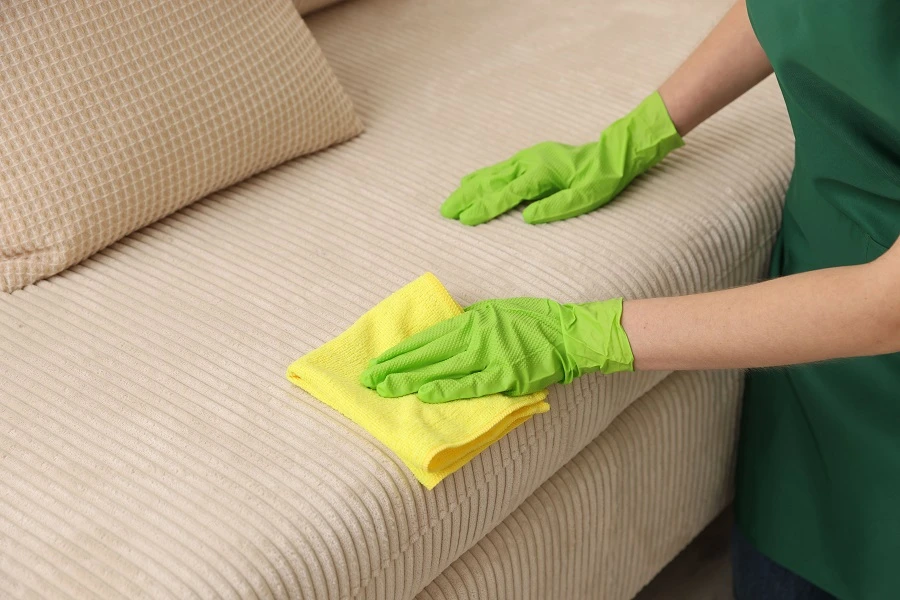
A consistent weekly routine prevents most deep-clean emergencies. How often should you deep clean your couch? Most households benefit from a thorough session once or twice a year — but what happens between those cleans matters just as much.
Simple habits that go a long way:
- Weekly vacuuming: Run the upholstery attachment over seams, armrests, and cushion tops every week to stop surface soils from working their way into the fabric.
- Cushion rotation: Flip and rotate cushions regularly to distribute wear and prevent uneven fading or sagging over time.
- Immediate spill response: Blot new spills within the first few minutes — the difference between a quick cleanup and a set-in stain is almost always how fast you act.
- Pet hair removal: A slightly damp rubber glove or microfiber cloth lifts fur more effectively than dry vacuuming alone; follow up with the vacuum to clear what's left behind.
- Cleaner on hand: Keep a small bottle of the correct code-appropriate cleaner accessible so you're never scrambling when accidents happen.
Staying consistent with these habits between sessions is the same mindset behind keeping everything in your house clean on a schedule — small, regular efforts prevent the kind of buildup that makes a full deep clean feel overwhelming.
When It's Time to Bring in a Professional
A clean couch is achievable for most fabric types with the right method and a bit of patience. Moisture control and matching your approach to the fabric code matter far more than aggressive scrubbing.
That said, some situations call for more than a DIY clean can deliver — velvet and suede coded X, persistent pet odors that return after drying, stains that keep coming back, or any fabric with an unreadable code. When that's the case, pushing forward risks permanent damage. Reaching out to a professional cleaning service like EuroMaids is the smarter move. Contact us to schedule a free quote — we'll take it from there.

Related Posts
April 6, 2026
April 13, 2026
How to Clean House After Mold Remediation: The Complete Checklist
Not sure how to clean house after mold removal? EuroMaids walks you through surfaces, carpets, air quality, and HVAC in one complete guide.
Read More
March 18, 2026
March 18, 2026
How Much Does Post-Construction Cleaning Cost in Naperville? 2026 Guide.
Post-construction cleaning cost in Naperville runs $0.20–$0.45/sq ft in 2026. See the price breakdown, what's included, and how to avoid surprise charges.
Read More
December 29, 2025
March 18, 2026
The Ultimate Bathroom Deep Cleaning Checklist: 12 Steps to Perfection
Learn bathroom deep cleaning from pros! This 12-step guide covers everything from grout to fixtures for a spotless, sanitized bathroom. Get started now!
Read More