


How to Clean Vomit Out of Carpet and Eliminate Odor for Good
Vomit on the carpet is one of those situations where every minute counts. Stomach acid and bile pigments begin bonding to carpet fibers almost immediately, and moisture that soaks into the padding turns a manageable mess into an odor problem that outlasts the stain itself. The same principle applies whether it's a sick child or a pet: act fast and work smart.
This guide walks you through how to clean vomit from carpet, from the first 10 minutes to the final fiber restore, with notes on when carpet cleaning services make more sense than another DIY attempt.
Safety First: Protect Yourself Before You Start
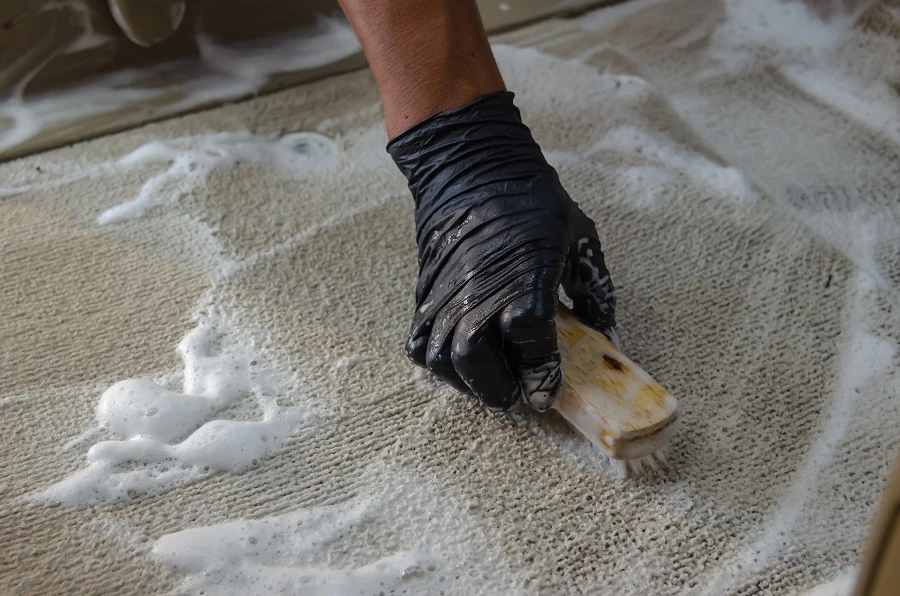
Before touching anything, put on disposable gloves. If the mess is illness-related, a basic face mask adds a reasonable layer of protection. Open a window right away and keep children and pets out of the room until cleanup is complete.
The CDC recommends acting quickly to prevent a permanent stain and treating any bodily fluid spill as a potential hygiene risk. That means treating the area as contaminated until it has been cleaned and disinfected.
A few things to avoid before you even reach for a cleaning product:
- No rubbing: It pushes vomit deeper into the carpet pile and spreads the stain outward.
- No hot water: Heat sets organic stains permanently — cold water only throughout this process.
- No mixed chemicals: Bleach and ammonia-based cleaners together produce toxic fumes.
- No over-wetting: Excess moisture soaks into the carpet backing and padding, creating a secondary odor problem surface cleaning cannot fix.
What to Do in the First 10 Minutes
Speed matters more than product choice at this stage. Work through these steps in order.
#spoilers_start
Minutes 1–2: Remove Solids
Use a spoon, spatula, or stiff piece of cardboard to scoop solids into a plastic bag. Work from the outer edge of the mess inward to avoid spreading it. Seal and discard the bag immediately.
Minutes 2–4: Blot Liquids
Lay paper towels or a clean white cloth over the wet area. Press down firmly and lift. Do not wipe or drag. Replace towels as they absorb moisture and repeat until no more liquid transfers.
Minutes 4–6: Apply a Neutralizer
Sprinkle a light layer of baking soda over the damp area to begin neutralizing acids. Alternatively, apply a small amount of enzyme pre-treatment if one is on hand. Either option slows the bonding process while you gather the rest of your supplies.
Minutes 6–10: Cold Water Rinse
Spray or pour a small amount of cold water over the spot to dilute remaining residue. Blot immediately. Repeat two or three times, using minimal water each pass.
#spoilers_end
Supplies That Work (and What to Skip)
Gathering the right materials before the full cleaning process saves time and prevents accidental damage.
Keep on hand:
- Disposable gloves
- Spoon or stiff scraper
- Clean white cloths or paper towels
- Cold water in a spray bottle
- Mild, fragrance-free dish soap
- Baking soda
- Enzyme cleaner (labeled pet-safe or child-safe)
- Wet/dry vacuum (optional but helpful for extraction)
Enzyme cleaners break down the proteins, fats, and bacteria that cause odor rather than masking the smell. Products labeled for pet stains work equally well on human vomit.
Skip these:
Test any new product in a hidden spot, such as inside a closet or under furniture, before applying it to the visible area.
How to Clean Vomit From Carpet: Step by Step
Once solids are removed and the area has been blotted, work through these steps in order. Skipping ahead or changing the sequence reduces effectiveness.
Step 1: Soap Solution Pre-Treatment
Mix one teaspoon of mild dish soap with two cups of cold water, spray lightly onto the stained area, and let it sit for five minutes. The soap loosens vomit proteins from the carpet fibers. Blot firmly with a clean white cloth — do not scrub.
Step 2: Blot and Lift
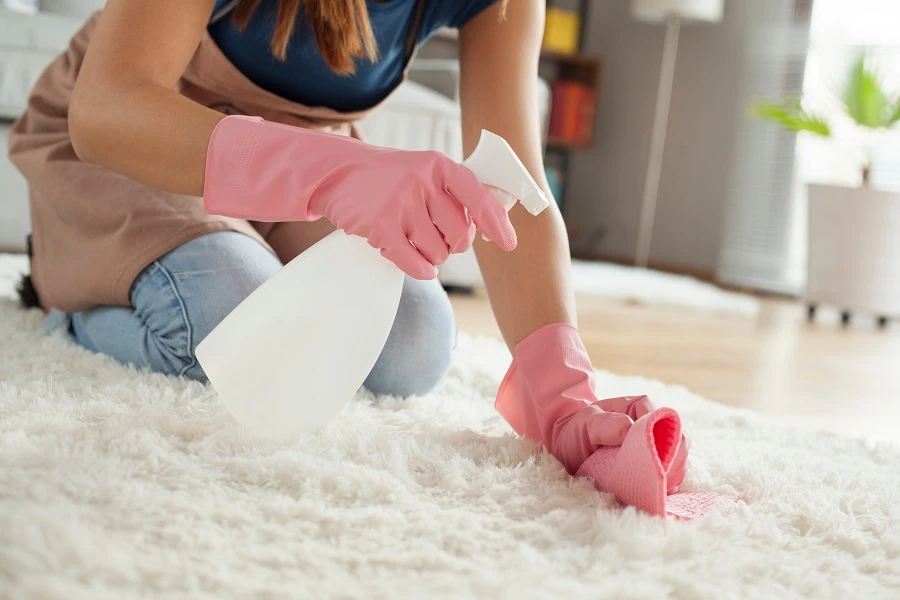
Work from the outer edge inward, pressing the cloth down and lifting straight up. Replace the cloth each time it picks up residue and continue until it comes up mostly clean.
Step 3: Apply Enzyme Cleaner
Spray the enzyme cleaner onto the stain so the fibers are lightly damp but not soaked, then allow it to dwell for at least 15 minutes — the minimum contact time needed to break down organic residue. For illness-related messes or pet vomit, extending the dwell to 20–30 minutes improves results. Blot or extract with a clean cloth after the dwell period.
Step 4: Cold Water Rinse
Apply small amounts of cold water to flush out soap and enzyme residue, blotting until the cloth comes up clean. Over-wetting drives moisture into the padding, so use a light hand — and if you have a wet/dry vacuum, now is the right time to use it.
Step 5: Dry Fast
Lay dry towels over the area, press down firmly with your foot to draw moisture upward, and then position a fan to blow air directly across the carpet surface. Fast drying prevents mildew and reduces wicking, where dissolved residue travels back up from the padding as the carpet dries.
Remove Vomit Smell and Sanitize Safely
A carpet that looks clean but still smells usually has residue in the padding, not just the surface fibers. Eliminating the odor requires both neutralizing the source and ventilating the area.
- Baking soda overnight: Once the carpet is mostly dry, sprinkle a generous layer of baking soda across the affected area, leave it for at least 8 hours, and vacuum slowly the next morning with multiple passes.
- Ventilate the room: Open windows and run a fan across the carpet surface. Even cracking a window for an hour during a Chicagoland winter helps move stale, odor-laden air out.
- Enzyme cleaner reapplication: If odor persists after the baking soda treatment, apply a second round of enzyme cleaner with a full dwell time. The EPA advises following the contact time on any registered disinfectant label.
- Sanitize for illness-related messes: Odor removal and disinfection are separate steps when the cause is illness. Apply a child- and pet-safe disinfectant after the carpet is clean and dry, keeping the area off-limits until it has fully dried.
- Check the padding: Press a dry cloth firmly into the carpet after cleaning. If it comes up damp after several hours, moisture has reached the padding and surface treatment alone won't eliminate the odor.
Thorough drying is the deciding factor between a job that stays clean and one that keeps coming back.
Old or Dried Vomit Stains: A Reset Plan
Dried vomit has bonded to the carpet fibers and set into the backing. Before any cleaner can work, the stain needs to be rehydrated. Skipping that step leads to fiber damage and incomplete odor removal.
- Rehydrate first: Mist the area lightly with cold water and wait 10 minutes to soften dried residue. Blot to lift what you can before adding any cleaning solution.
- Work in cycles: Apply soap solution, blot, then apply enzyme cleaner with a 15–20 minute dwell. Rinse cold and dry. Repeat two to three cycles as needed.
- Treat remaining discoloration: Use an oxygen-based cleaner on light-colored carpets after the odor is gone. Spot-test first. Never use peroxide on wool or dye-sensitive fibers.
- Handle wicking: If the stain reappears after drying, residue is traveling up from the padding. Surface treatment won't fix it — professional carpet cleaning with extraction equipment is the right call.
Old stains take more patience than fresh ones, but the process works when followed in order. If the odor or discoloration persists after two full cycles, the padding has likely absorbed enough residue that DIY cleaning won't fully resolve it.
After-Care: Finishing the Job and Keeping Fibers Healthy
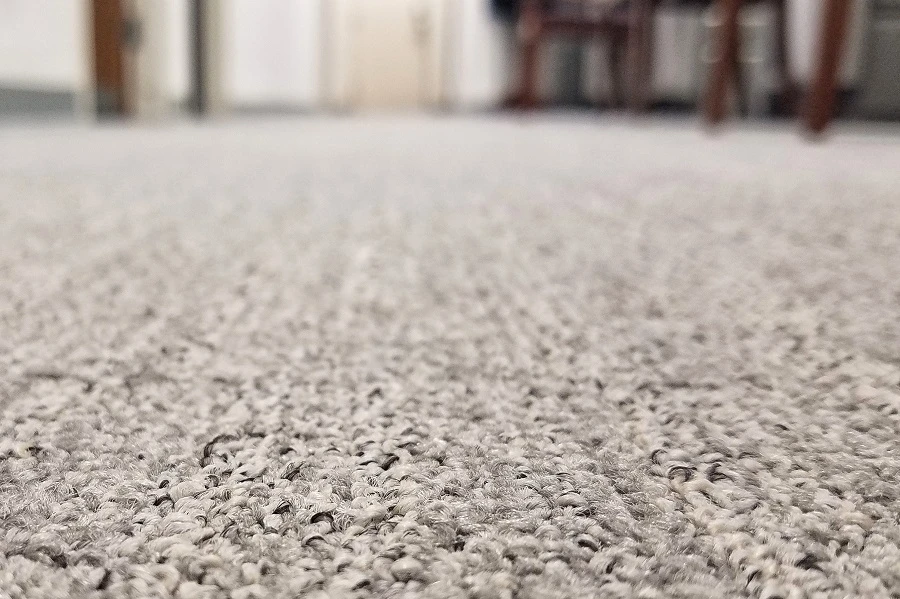
Once the carpet is completely dry, a few finishing steps bring the fibers back to normal.
- Brush fibers upright: Use a soft-bristle brush to restore the pile — blotting and pressing during cleanup flatten the fibers, and dried residue causes stiffness if left alone.
- Vacuum thoroughly: Run the vacuum slowly over the treated area in multiple directions to clear baking soda residue and reset the texture.
- Fix crunchy texture: A light mist of cold water followed by blotting and a second drying cycle resolves stiffness from soap or enzyme residue that wasn't fully rinsed out.
- Limit foot traffic for 24 hours: Walking on damp carpet pushes residue back into the pile, so keep the area clear until it's fully dry.
- Check the next morning: If odor has returned or the spot looks darker than the surrounding carpet, repeat the enzyme treatment and drying cycle once more.
Consistent carpet maintenance between incidents keeps fibers in better shape and makes future stain removal easier.
#cta_start
Getting Your Carpet Back to Normal
When you catch the mess early and follow the steps in order, most vomit stains respond well. Remove solids, blot from the edges inward, treat with soap solution and enzyme cleaner, rinse cold, dry fast, and finish with baking soda overnight. That sequence handles the majority of fresh spills without leaving residue or recurring odor.
#cta_end
For anything that wicks back, lingers past a second treatment, or involves padding saturation, Naperville house cleaning services from EuroMaids bring the equipment and experience to finish what DIY cannot. Locally owned since 1996, BBB A+ rated, and trusted by families throughout DuPage County. Contact us to schedule a free estimate.

Related Posts
April 15, 2026
April 15, 2026
Move-Out Cleaning List: From Kitchen to Carpets
From kitchen grease to carpet stains — this move-out checklist covers it all. DIY tips, timeline, and professional cleaning options for Chicagoland renters.
Read More
April 14, 2026
April 15, 2026
How Much Does Upholstery Cleaning Cost in Naperville, IL? 2026 Guide.
The average cost of upholstery cleaning in Naperville runs $120–$232 in 2026. See prices by furniture type and book a free estimate with EuroMaids.
Read More
April 13, 2026
April 13, 2026
How to Deep Clean a Couch at Home: A Complete DIY Guide
Looking for the best way to deep clean a couch? This guide covers every fabric type, the right tools, and stain removal tips that actually work.
Read More